Office storage that fits: pedestals, cupboards and steel
Pedestals, cupboards, filing, lockers and safes each do one job well. Which belongs where in the office, and the measurements to check before you order.
Office storage problems are rarely about having too little. They come from having the wrong kind in the wrong place: paperwork piled by the printer, coats hung on the backs of chairs, a cupboard nobody can open because a desk is in the way. It helps to think about storage in zones, working outwards from the desk. Each kind then has an obvious home.
At the desk: pedestals
A pedestal keeps the things one person uses every day within arm's reach: stationery, the files they are working on, a bag. There are two main kinds.
- Mobile pedestals run on castors and tuck under the desk. They suit most desks, and they go with the person if the team swaps seats. Wooden ones come with 2 or 3 drawers, and there are steel versions too.
- Fixed pedestals are part of the desk set-up rather than free to roll about. Some desks come with one built in, which saves buying a separate unit.
Check the number of drawers and the space under the desk before choosing. Where people hot-desk, a mobile pedestal or a locker for each person works better than fixed drawers nobody owns. Browse pedestals and drawers, or desks with storage already built in.
Along the wall: cupboards and bookcases
Team files, reference books, spare paper and anything the whole office shares belong in cupboards and bookcases against a wall. Height is the main choice:
- Desk high units sit beside a desk or under a window, and their tops become extra work surface.
- Mid height units hold more without blocking light or the view across an open-plan room.
- Full height units store the most for the floor space they take, and belong against a solid wall.
The wooden Impulse cupboards and bookcases come in heights from 800mm to 2000mm, in finishes that match the desks in the same range. Open bookcases cost less and are quicker to use. Cupboards with doors look tidier and keep the dust off. Browse cupboards and bookcases.
Wood or steel?
Wooden storage matches the desks and looks at home in rooms that clients see. Steel copes well with heavy files, busy shared areas and stock rooms where cupboards take a few knocks.
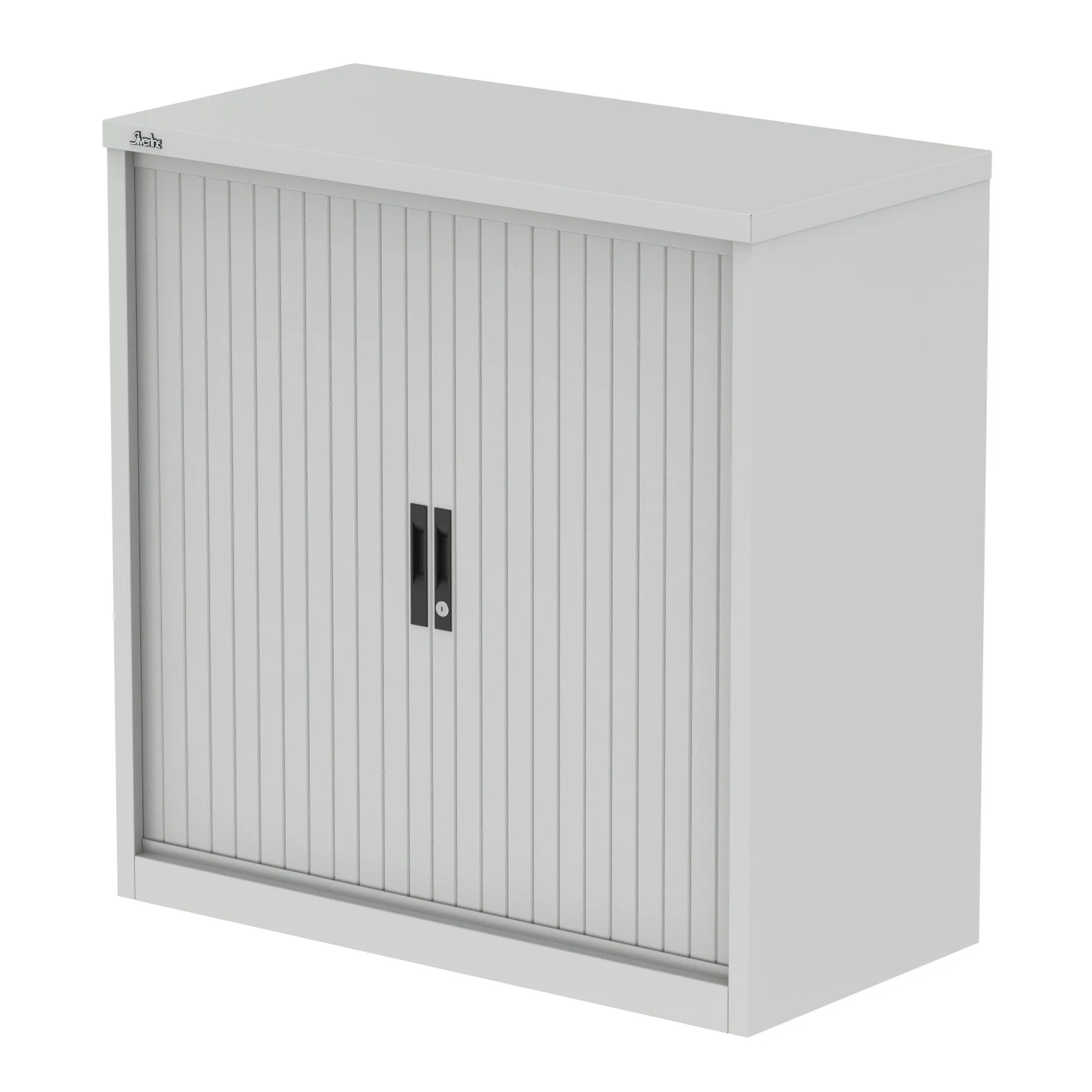
The steel range includes two-door stationery cupboards with shelves, and side tambour cupboards. Tambour doors roll back into the sides of the cupboard, so they need no space to swing open, which helps in a corridor or a tight corner.
Much of the steel storage can be ordered in a range of colours, from greys and white to brighter shades. Coloured steel is made to order, which typically means 10 to 20 working days, and the checkout shows the lead time. See steel storage.
Filing: cabinets or frames
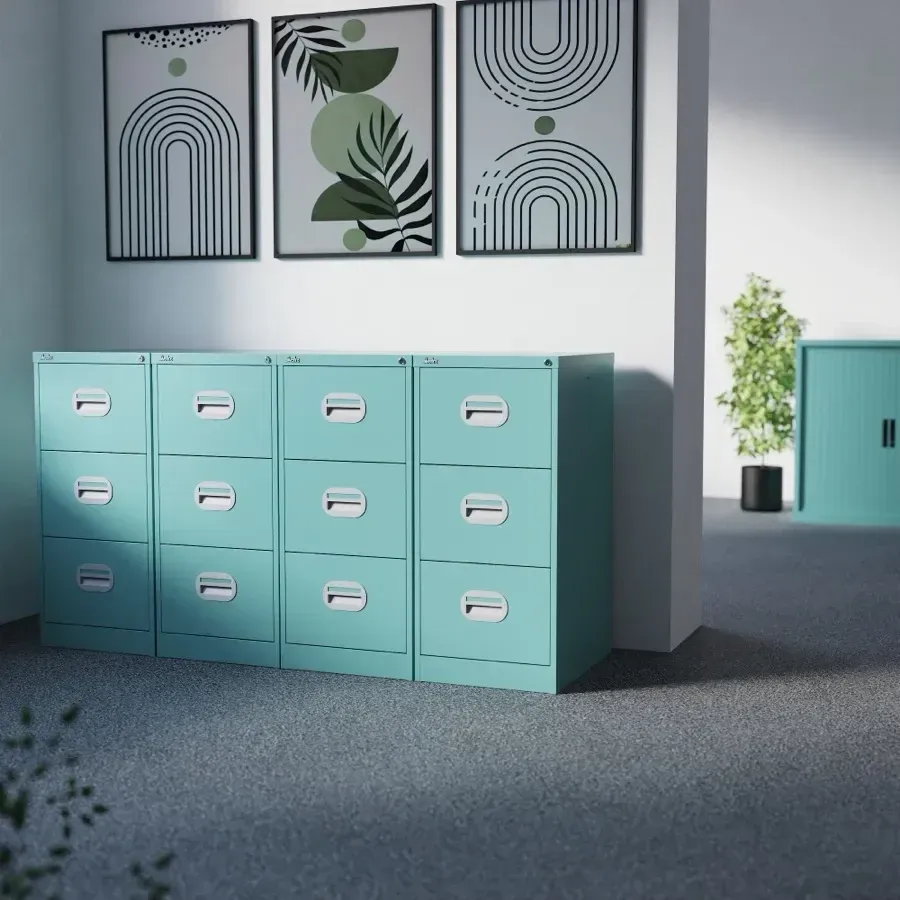
If you still keep paper records, there are two ways to hold them. Filing cabinets have deep drawers for hanging files, and they suit an office that pulls files out all day. Filing frames hang files inside a cupboard instead, so one cupboard can hold shelves and files together.
Before buying more filing, it is worth a clear-out. Much of what sits in cabinets could be scanned or archived somewhere cheaper than office floor space. Browse filing cabinets.
Personal and secure storage
Lockers give each person a place for a coat, a bag and a laptop, which matters most where people do not have a desk of their own. The 1800mm high lockers come with 1, 2, 4 or 6 doors: fewer, taller doors for coats, or more, smaller ones for bags and laptops.
For cash, keys, data and documents that must be locked away, look at the security safes. They run from key safes to fire and data safes, many with a choice of key, electronic or fingerprint lock. Fitting a safe is something we quote for separately, not an option at checkout, so ask us if you want one installed.
Measure before you choose
- Keep about 1000mm of floor clear in front of every cupboard and filing cabinet, so doors and drawers open fully and someone can stand at them.
- Check the height and depth under each desk for a pedestal, and whether a modesty panel or cable tray is in the way.
- Check the route in. Tall units usually arrive flat-packed, but measure the stairs, landings and lift anyway.
- Count what you actually store now, then add a little for growth rather than a lot.
Typical clearances for storage, desks and walkways are on the size guide.